
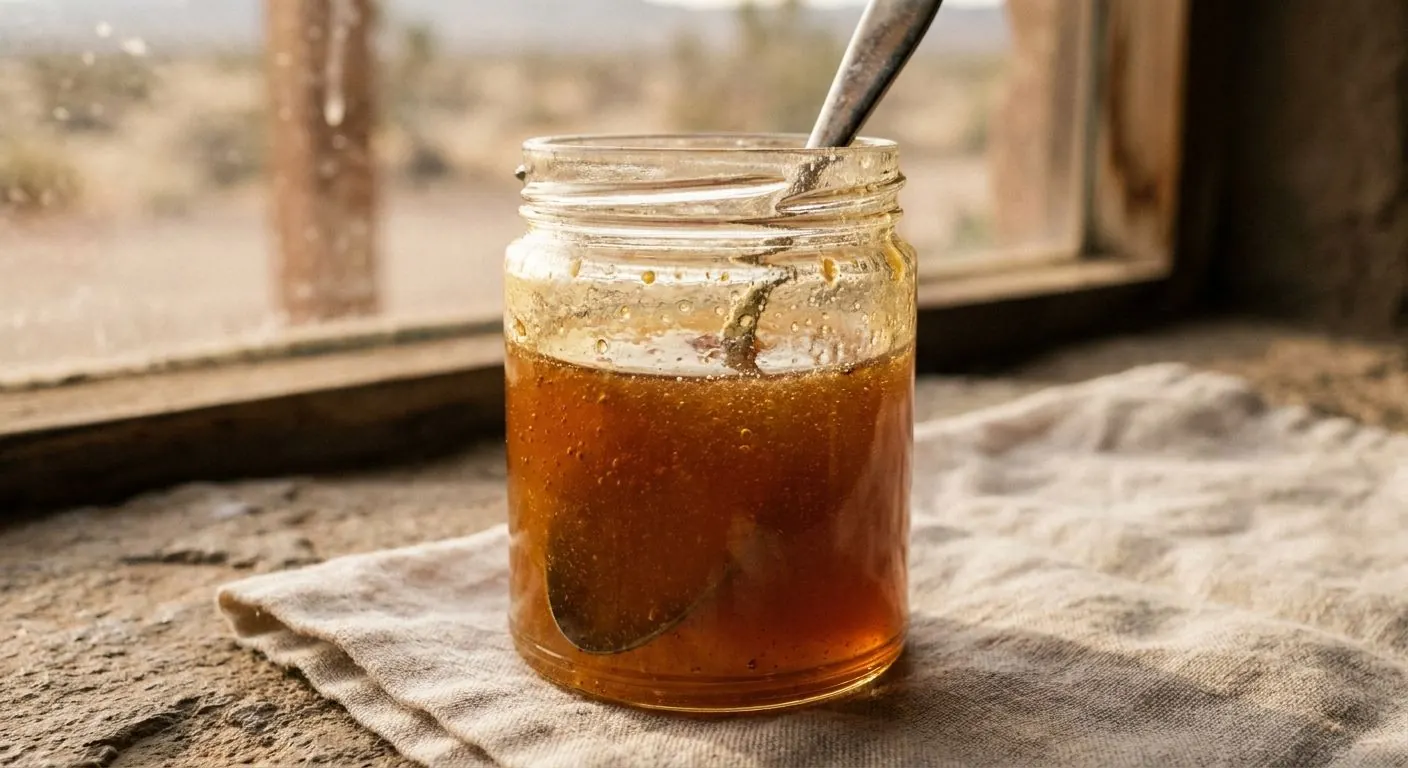
Raw honey means honey that has not been heated or fine-filtered before bottling. That is the whole definition. What it does not mean is anything about quality, origin or purity — and in most countries the word is not regulated at all, so on a label it proves very little by itself.
Here is what the term is actually worth knowing for.
What heating and filtering are for
Commercial honey is usually warmed and passed through a fine filter. Both steps are done for commercial reasons: warm honey pours faster and bottles more cleanly, and filtering removes pollen and wax so the jar stays clear and liquid on a shelf for longer.
Neither step is sinister. They are processing choices that trade some of the honey's aroma and character for consistency and shelf appeal. Raw honey keeps the character and gives up the consistency.
How to tell, without trusting the label
- It varies between batches. Identical colour and texture jar after jar suggests blending or processing.
- It is rarely perfectly clear — unfiltered honey carries traces of pollen and wax.
- It changes over time rather than staying liquid indefinitely.
- The seller can tell you the region and the season. Processing hides origin; raw honey tends to come from people who know theirs.
Using it day to day
Eat it off a spoon, over yoghurt or labneh, on bread with butter, or alongside strong cheese. Stir it into something warm rather than hot — high heat drives off the volatile aromatics that are most of what you paid for, and turns an expensive honey into an ordinary sweetener.
Store it at room temperature with the lid closed and out of direct sunlight. It does not need refrigeration, and a dry spoon every time is the only real rule — water introduced into the jar is what allows fermentation to start.
It is a food rather than a supplement, and largely sugar like any honey. That is worth saying plainly, because a great deal of what is written about raw honey implies otherwise.
Where Sidr fits
Sidr is dense enough to eat by the spoon without cloying, which is unusual, and its long caramel finish is exactly the thing heat destroys first. If you are going to buy one honey to eat rather than cook with, that is the argument for it.
Common questions
What does raw honey mean?
Honey that has not been heated or fine-filtered before bottling. The term is unregulated in most countries, so it is only meaningful alongside a seller who can tell you the origin and harvest season.
Is raw honey better than regular honey?
It retains more aroma, pollen and flavour character because it has not been processed for clarity and shelf life. Nutritionally the difference is small — both are around 80% sugar.
How should raw honey be stored?
At room temperature, lid closed, out of direct sunlight, and always with a dry spoon. It does not need refrigeration and does not meaningfully expire.
Can you cook with raw honey?
You can, but high heat drives off the aromatic compounds that distinguish a good single-origin honey. Stir it into warm rather than hot food, and use a cheaper honey for baking.